THE CONFERENCE AGENDA

Washington DC, 2 - 3 September 2026
Schedule
Create your personal agenda –check the favourite icon
Keynote Presentation
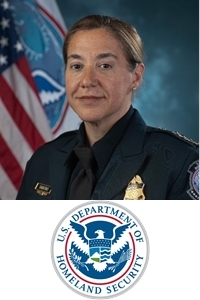
Keynote: The unseen shield: Professionalizing America's identity workforce for national security
This keynote address argues that a professionalized identity workforce is a critical and urgent necessity for U.S. national security. The speaker highlights that while identity is the foundation for countering every major threat—from border security and cyberattacks to insider threats and fraud—the thousands of government professionals performing this work lack unified standards, formal training, and a defined career path.
The address warns that without a formalized and interoperable identity workforce; the nation remains vulnerable to adversaries who exploit identity vulnerabilities with increasing sophistication. The proposed solution is to establish a professionalized corps of identity experts, modeled after cyber and intelligence career fields. This would involve creating a clear competency framework, a training and certification pipeline, and formal career tracks. The result would be a more resilient nation, capable of faster threat attribution, stronger fraud prevention, and enhanced public trust in a rapidly evolving digital world.
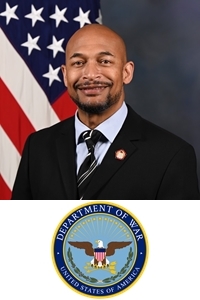


Reactive or proactive? Why the architecture matters
Historically, both cyber and identity security systems have been designed to react to known threats, rather than proactively prevent the next threat. But is this wise? Has that orientation actually worked? It would appear that cyber attacks, breaches, hacks, frauds and other identity-related problems have grown, seemingly unencumbered, despite a massive economic investment in systems claiming to mitigate them. In fact, it's the reactive nature of these systems that enables the next attack to go unnoticed until after the fact. The dogma that identity data and biometric data must be bound to devices, rather than to each other, might help device manufacturers sell future generations of devices, but it also forces the reactive nature of identity and cyber security. It’s the intentional separation of these attributes that enables the attacks that traditional architectures can only react to. In this presentation, Jay describes why a proactive system architecture, the proper binding between a verified identity, the human that identity describes, and the privileges that person is entitled to is the key to preventing the next cyber-identity attack.

Agents at the gate: Securing agentic access to consumer authentication systems
AI agents are no longer just answering questions — they're acting on behalf of users, calling APIs, managing credentials, and interacting with authentication systems at scale. This shift introduces a new class of identity challenges: How do you authenticate an entity that acts autonomously but on behalf of a human? How do you scope its access without breaking the user experience?
You'll walk away with a practical framework of dos and don'ts for agentic access, including how to think about token scoping, consent delegation, session boundaries, and abuse prevention. Whether you're building AI-powered assistants or securing the identity layer they depend on, this talk will give you a grounded perspective on where agentic identity is headed and how to get it right.

Building the bridge to PQC: Stronger identity security starts today
This presentation will explore why the identity ecosystem must begin preparing now for the transition to post-quantum cryptography, even as full PQC adoption remains a work in progress. As the risk of “harvest now, decrypt later” grows, organizations need practical ways to strengthen identity security today while building toward a quantum-ready future. The session will focus on actions that can be taken now, including improving crypto agility, strengthening credentials and identity assurance, leveraging biometrics to reinforce trust in authentication and recovery processes, and securing key processes such as onboarding and account recovery. Attendees will leave with a clear view of practical steps to reduce risk and prepare for the transition ahead.
Establishing trust in digital credentials: How DMVs are making digital identity possible AND practical
For more than a century, state and provincial driver licensing agencies have served as North America's de facto identity authorities — verifying identity, vetting source documents, and issuing the credential that more residents carry and more relying parties accept than any other form of ID. As digital identity moves from pilot to production, that role hasn't disappeared; it has simply gone mobile. This session will explore the idea that DMVs are not merely participants in the digital identity ecosystem, but its most credible foundation, and that the path to real-world interoperability runs through the standards DMVs helped build. Attendees will leave with a clearer understanding of why the DMV's expertise in identity verification is not easily replicated, why standards convergence — not standards proliferation — is the surest path to widespread digital ID acceptance, and what's at stake for issuers, relying parties, and the public.

Financial institutions already don’t trust you, maybe that’s why we’re ahead?
Forfinancial services, the status of consumer identity is advanced but under stress. Banks and other financial institutions are no longer treating identity as only a login function. It now spansonboarding, KYC/CDD, fraud prevention, device binding, ongoing authentication, transaction risk, and recovery. Federal guidance expects financial institutions to use risk-based authentication and access controls, while the Federal Reserve’s more recent commentary shows that institutions are moving from physical-document-heavy onboarding toward more digital, layered, and signal-rich models that include device intelligence, biometrics, and multiple risk signals. So let’s talk about Customer On-Boarding - it’s already expensive to get them, and more complicated to authenticate them.

NIST Tatt-E: Benchmarking the state of the art in tattoo recognition
Law enforcement agencies have used tattoos for many years to assist in investigations. Historically, this has involved searching tattoo image databases using text descriptions of tattoos. However, the effectiveness of this method has been limited by the subjectivity of text-based descriptions. Recent advances in technology have enabled developers to leverage artificial intelligence (AI) to create automated, image-based tattoo search capabilities. Compared to traditional approaches that rely on subjective text descriptions, image-based searching provides a more objective means of retrieval. To determine whether these systems are fit for purpose, decision-makers will need to know their capabilities and limitations. NIST is running an evaluation program to assess the accuracy of tattoo recognition algorithms. This evaluation will measure the capability of these algorithms to detect tattoos in an image and to perform automated matching of different images of the same tattoo from the same subject over time. Thistalkwill present the state-of-the-art accuracy in image-based tattoo recognition and discuss current capabilities and limitations of the technology.

Verified once, assumed forever: From one-time age checks to continuous identity assurance


Beyond SMS OTP: The future of authentication
Sending a one-time passcode over SMS is practically synonymous with authentication. As consumers, we receive them every day; as business leaders, it's often the first security layer we implement.
But the gaps are becoming harder to ignore. SMS OTP doesn't fully protect against account takeover attacks, and SMS pumping fraud can quietly drive costs to astronomical levels.
So what's the answer? Layer in other communication channels? Abandon SMS entirely for newer technologies like Silent Network Authentication?
The reality isn't so cut and dry — the right approach depends on your customers, your risk profile, and the business outcomes you're trying to achieve. In this session, Telesign's Senior Solutions Engineer breaks down where SMS OTP still makes sense, where it doesn't, and how to build an authentication strategy that evolves with your users rather than against them. You'll leave with a practical framework for evaluating what "beyond SMS OTP" should actually look like for your business.


Bind, Verify, Trust. Meet the privacy preserving biometrically binding digitally signed UR Codes come to life by FaceTec and Foster Freeman at borders across the globe


Panel: Beyond the fingerprint: Navigating the next generation of biometric innovations and their real-world impact
- Review the most important recent innovations in biometric technologies and the real-world applications of these
- Highlight the rapid evolution of biometric modalities beyond traditional fingerprint and facial recognition
- Analyze the unqieu advantages and shortcomings of each of these types of biometric technologies,e.g. increased accuracy, fraud prevention, authentication - and establish where these innovations will have the most impact
- What are you most excited for regarding potential developments and future use cases for biometric technologies?





Panel: Evolving IAM: Trends, best practices, and future proofing
- Review the evolution of IAM practices in an age of increasing scam sophistication
- Address the challenges of scalabiliy, user experience, and compliance in IAM solutions
- Review the impact PAM has on cybersecurity assurancce and discuss the ease of creating and maintaining PAM accounts throughout small, medium, and large enterprise systems
- Look across different industries and sectors, public and private, for IAM best practices







Panel: The new baseline: Adopting digital ID to future-proof customer experience and security in financial services
- How is the role of digital identity evolving in financial services?
- Assess the financial sector in the US' adoption of digital ID programmes (e.g. mDLs( into verification procedures
- Discuss how digital ID is being innovatively applied across operations to verify customers, such as voice biometrics, onboarding, and fraud monitoring
- Review the current threat level to the digital ID ecosystem in the financial service sector. Could we be doing more to protect identities?







Panel: The road ahead for mDLs: Progress, challenges, and potential
- Review the progress of mDL adoption across different states
- Discuss the issues that have arisen from mDL rollouts and how these issues can be solved at either a state or federal level
- Look into the current and potential use cases of mDLs being utilized in commercial environments
- Address privacy concerns and interoperability challenges





KYC in 2026: the shifts shaping the future of identity verification
Explore the five shifts shaping KYC in 2026, from AI fraud and reusable identity to continuous trust and adaptive verification.


Identity is the AI control plane


Mobile driving license (mDL): From concept to real-world implementation
Modernizing identity and access for critical infrastructure: Secure, privacy‑first biometric enabled access with ID2 pass
Critical infrastructure organizations face growing pressure to strengthen security while reducing friction for employees, contractors, and visitors. Traditional access cards and paper credentials are increasingly vulnerable to loss, duplication, and misuse—while manual verification slows operations and strains staff resources.
This session explores howID2 Passenables a modern, biometric approach to identity and access management for critical infrastructure environments. Attendees will learn how biometric credentials can enhance facility security, protect privacy, and improve operational efficiency—without disrupting existing access control systems or workflows.

Artifical intelligence presentation
Face recognition - seven areas for further gain
Face recognition capability has improved massively over the last decade, benefitting from AI research in machine learning, deep neural networks, and computer vision. New capability has enabled more developers to offer an expanded and broad array of applications. Yet some problems remain, and the talk will describe seven areas where further technical advancements are needed. Additionally, the presentation will outline how current standardization activities and the recent expansion of NIST’s face recognition evaluations could improve capabilities in some of these areas.

Scams and frauds tied to the mail: Investigations conducted by the U.S. Postal Inspection Service
With AI and Deepfakes as the main topic of discussion in fraud, paper still plays an integral role in how fraudsters perpetrate their schemes. In this presentation you will hear about the latest trends the U.S. Postal Inspection Service investigates and hear case studies on check fraud and lead list broker services.

SEDI: From inception to legislation
Borrowed playbook: Applying private sector fraud defenses to government benefit programs
The federal government loses between $233 billion and $521 billion annually to fraud and improper payments and the threat is accelerating. GAO reports that AI-enabled synthetic identities, deepfakes, and account takeover attacks are now the dominant attack vectors against benefits programs, grants, and citizen services. Yet many agencies still rely on legacy identity controls that were never designed to detect these modern threats.
This session explores how federal agencies can deploy modern identity verification to prevent fraud at critical moments: benefits enrollment, account creation, credential resets, and disbursement approval — before taxpayer dollars are compromised.

Panel: Beyond the unlock: Practical applications, future use cases, and the technology driving next-gen facial recognition
- Examine advancements, challenges, and ethical considerations in facial recognition technology
- Explore practical applications of facial recognition across industries, the challenges and success stories, and what future use cases you are hoping/expect to see in the coming years
- Discuss the importance of responsible and ethical use of facial recognition - address public response to recent use cases from law enforcement and online safety initiatives
- Review efforts to reduce bias and improve fairness in facial recognition technologies


Panel: Integrating decentralized identity: benefits, challenges, and lessons learned from 'no phone home'
- Review the latest frameworks and standards for developing decentralized identity systems
- How can decentralized identity be integratede into existing or upcoming digital identity initiatives - what benefits would this bring?
- No Phone Home - What has this issue taught the community to consider moving forward when developing decentralized identity systems?
- Identify challenges associated with decentralized identity programmes,and discuss how these challenges can be addressed or solved






Panel: Reviewing best practices to prevent rising fraud risks in financial services
- Review trends in identity theft and fraud, their impact on individuals, and how to educate and protect consumers effectively
- How can you effectively balance friction and risk in authentication processes. Which of these two is most pertinent to consumers?
- Is there a one-size fits all V&A approach for consumers and employees or does each subsect need different processes?
- What current initiatives are being implemented to improve the detection of fraud across the US?
- Assess the role of government entities, telcos, and private sector commpanies in implementing effective V&A systems






Panel: The criminal gravy tr(ai)n: How are AI & cyber threats evolving and how can you future proof your security?
- What are the biggest threats in the cybersecurity landscape?
- How can AI strengthen cybersecurity threat detection, response automation, and predictive analytics?
- Address the risks of AI misuse in cyberattacks, including identity fraud, social engineering, and deepfakes
- Review use cases of AI enhancement of cybersecurity operations
- Discuss the importance of public-private sector collaboration to harness the potential of AI while mitigating emerging threats


Every digital transaction has an identity problem — and most industries haven't noticed yet
From buying a home to onboarding a new hire to authorizing an AI agent to act on your behalf, the gap between digital convenience and identity certainty is widening fast. In this session, Daniel Buchner, Director of Product, Digital Assets at Proof, and Kurt Ernst, Principal Product Manager for Risk and Fraud at Proof, trace the rise of the Identity Authorization Network across industries and government, expose what AI-generated deepfakes and synthetic identity fraud look like in the wild, and make the case that Digital ID isn't a compliance feature — it's the trust infrastructure the entire digital economy is being built on top of, whether we've planned for it or not. Leave with a cross-sector framework you can apply immediately and a clearer view of where identity risk is headed next.


Connected intelligence: Resolving identity beyond biometrics through events, objects, attributes, and behaviors
For decades, identity resolution has focused almost exclusively on physiological markers: matching a face, a fingerprint, or an iris against a static database. But in today’s unconstrained environments—spanning real-time video networks, digital forensics, and tactical edge operations—biometrics alone are no longer sufficient. Static biometric records often lack critical context, and adversarial counter-measures or poor-quality captures can degrade matching confidence.
This presentation introduces Connected Intelligence, a paradigm shift that expands the definition of identity. We discuss how to resolve identities by unifying physiological biometrics with Events (spatial/temporal encounters), Objects (vehicles, license plates, weapons, and smuggled contraband), Attributes (scars, marks, tattoos, and age estimation), and Behaviors (patterns of life, association networks, and cross-channel digital links).


Mission-ready identity: Advancing fraud prevention across government services
The Fraud Executive Orderreleased in March 2026signals a major shift in how digital identity is used to prevent fraud, requiring pre-payment identity verification, defining minimum verification standards, and expanding data sharing to detect fraudulent activity.
This session will explore how identity verification can be operationalized as a corecomponentof digital services, aligned to fraud risklevelsand integrated into broader fraud detection strategies. Through an interactive discussion, attendees will gain practical insight into strengthening digital identity ecosystems while balancing security, compliance, and user experience.
Participants will explore how to navigate these requirements across digital services, align identity verification to varying fraud risk levels, and balance security with user experience. Attendees will leave with a clearer understanding of the Executive Orders’s implications and practical considerations for strengthening fraud prevention strategies within their organizations.
Key Takeaways
- Understand how the Fraud Executive Order elevatesdigital identityas a corecomponentof fraud prevention.
- Learn how to alignidentity verification to fraud risk levelswhile implementing emerging government-wide standards
- Explore strategies fordata sharing and identity validationto detect fraudulent or duplicate claims
- Recognize how identity integrates into broaderfraud detection capabilities, including analytics and monitoring
The body is the signal: Autonomous identity infrastructure across systems, risk, and care
The checkpoint model is broken at its foundation. Every credential that leaves the body can be stolen, replicated, or synthesized. Bio_Sole's hosted seminar introduces the autonomous alternative — where the biometric never leaves the device, identity is self-attested by the individual, and the environment receives proof, not data. Panellists examine how autonomous identity reshapes enterprise risk, clinical data integrity, and connected infrastructure. Not a better biometric. A different architecture.
The Future of Financial Security: Balancing Innovation and Trust
The financial landscape is evolving fast — and so are the threats. As AI accelerates digital transformation across banking, fintech, and payments, financial institutions face a growing challenge: how do you embrace innovation without opening the door to fraud?
In this session, Vonage will explore how network-powered APIs are redefining the future of financial security — enabling institutions to stop fraud before it strikes, without sacrificing the seamless customer experiences that drive growth.
Key takeaways include:
- Real-world customer use case: See how a leading financial services customer leveraged Vonage network-powered solutions — including Silent Authentication and SIM Swap detection — to eliminate SMS social engineering attacks, achieve 50% faster authentication, and improve conversion rates.
- Innovation meets security: Examine the intersection of digital transformation and fraud prevention in the finance sector, and how businesses can build lasting customer trust while confidently adopting new technologies.
- The power of the network: Discover how network-powered APIs — drawing on real-time telco-grade signals — identify and mitigate fraud risks invisibly, without adding friction to the customer journey.
- Future-proofing your operations: Learn how financial institutions can stay ahead of emerging threats — from account takeovers and SIM swap attacks to synthetic identity fraud and AI-driven deepfakes — with scalable, future-ready solutions.

The next frontier in investigative technologies: Why tattoos are redefining identity standards
Human-in-the-loop biometrics in the age of agentic AI
Improvements in AI are enabling superior performance in automated biometric systems. However, these systems are also influencing human decision-makers in unexpected ways.
In face recognition, stronger algorithms can return doppelgängers that are difficult for reviewers to distinguish, potentially leading to false positives. At the same time, advances in generative AI are making biometric deepfakes more convincing, exposing security gaps and increasing fraud risk.
Across both areas, one thing is becoming clear: As AI takes on more work in biometric workflows, humans are often presented with more complex decisions. This dynamic can position humans a potential weak link in biometric system design.
This session presents SAIC’s perspective on this challenge and introduces an emerging approach to better integrate human and AI teaming to improve biometric outcomes. In the era of AI agents, this approach enables more informed, agentic AI.


Panel: Coordinating government, telcos, and the private sector to enhance V&A practices
- Explore real-world experiences with verification and authentication solutions from a diverse range of industries
- Balance customer priorities; how do we address friction versus risk in authentication processes?
- Highlight the newest solutions and technologies shaping rhe future of identity verification
- Understand how different sectors and populations require tailored approaches to identity solutions -can customers and worker be treated the same?
- Examine the varying priorities and unnique challenges faced by industries in implementing effective verification and authentication systems




Panel: Frictionless security: Balancing risk and user experience with next-gen CIAM authentication
- Identify and address gaps to enhance security and user experience
- Explore how CIAM priorities differ across industries and adapting solutions accordingly
- Leverage CIAM innovation for fraud prevention and trust-building
- Balance friction versus risk with technologies like passwordless authentication, MFA, and facial recognition



Panel: From stadiums to statehouses: Analyzing commercial biometric implementation and impact
- Review biometric adoption for commercial purposes across different industries - is sports & entertainment leading the way?
- What can government branches learn from the experience gained through commercial implementation of biometric technologies?
- Discuss the benefits gained through biometric adoption in commercial environments
- Review the human response to biometrics being deployed. What friction was faced during rollouts?



Panel: Integrating digital identity into digital public infrastructure
- Explore how DPI is evolving to meet the demands of an increasingly digital and interconnected world
- Examine the role of international collaborations and standards in shaping the future of national identity infrastructure
- Address the need for security, privacy, and user convenience in national identity programs amid rising data protection concerns
- Analyze the impact of emerging innovation like AI, biometrics, and decentralized technologies on the development of dgital public infrastructure





Beyond OTP: Redefining trust and authentication
In an increasingly digital and AI-powered world, two-Factor Authentication (2FA) has become critical for security-minded enterprises, but can often cause friction, impact user experience, and is vulnerable to social engineering attacks. CAMARA Network Powered Digital Solutions, developed by GSMA and the Linux Foundation, offers a seamless alternative with Number Verification and Silent Authentication. This technology enables secure, frictionless authentication directly through mobile network operators, eliminating the need for OTPs and reducing vulnerabilities.
This session highlights how Silent Authentication is transforming digital authentication, prioritizing both security and user experience.


JIT happens - Just not for your agents

Border management in contested environments: Data-driven solutions and the sensor-decider-effector loop


Call vs.caller - The critical distinction in voice channel authentication
As sophisticated fraud tactics like caller ID spoofing, network hijacking, and AI-driven voice cloning accelerate, enterprises can no longer rely on the origin of a phone call as proof of identity. There is a critical, yet often overlooked, distinction in modern telecommunications security: authenticating the call (verifying the device, network, or phone number) versus authenticating the caller (verifying the actual human speaking).
This presentation explores the dangerous security gaps created when businesses conflate these two concepts. Attendees will learn how threat actors exploit device-centric trust models and why shifting to human-centric authentication—leveraging advanced voice biometrics, behavioral analytics, and real-time identity verification—is essential for robust enterprise fraud defense. We will break down practical strategies for implementing seamless, secure voice authentication that protects the bottom line, reduces customer friction, and ensures that the voice on the line truly matches the identity on the account.
Key Takeaways:
- The fundamental technological differences between call validation and caller verification.
- How modern threat actors successfully bypass traditional, device-centric authentication.
- Best practices for integrating voice biometrics and behavioral identity into existing enterprise workflows.

From the world's game (soccer) to the world's games (Olympics)
In this fireside chat, attendees will learn how LAFC deploys next-generation technologies, such as biometrics, to revolutionize the fan experience. Drawing from World Cup ticketing insights and short-notice mega-events, the session explores the operational agility needed for modern venue management. Participants will also gain a sneak peek into 2028 Olympic preparations and discover how vendors and policymakers can collaborate to solve upcoming industry hurdles.

Modernising account recovery: How eBay made secure access seamless
Account recovery is where security and customer experience come together. In this session, we'll share eBay's journey of rethinking account recovery through product, design, and customer research. We'll discuss key insights, design principles, and lessons learned while balancing security with a simpler, more intuitive recovery experience. Attendees will leave with practical ideas that can be applied to designing recovery experiences at any scale.


The authority to say yes: Why identity isn’t enough for AI
Identity tells us who someone is. As AI systems begin acting on governed information, the harder question is whether the requested action is authorized—and who has the authority to approve it. Drawing on cultural rights as a proof case, this presentation introduces machine authorization as the missing layer between identity, authorship, and accountable AI.

Keynote: Bio Sole
Post-event networking party
Join us across the road from the Walter E. Washington Convention Center where Bio_Sole will be hosting our annual post-event networking party, taking place this year at Yardbird!
Create your personal agenda –check the favourite icon
Keynote panel: Seamless travel – pilots, passenger pathways, and progress
- Review the performance data and key operational learnings from recent digital travel credential (DTC) and biometric boarding pilots managed by international airlines and airport authorities.
- Examine how digital identity verification is being embedded into passenger pathways to optimize end-to-end traveler throughput and minimize physical friction from check-in to the boarding gate.
- Address the challenges of cross-border interoperability and international standard compliance (such as ICAO frameworks) to support unified identity verification across shifting geopolitical jurisdictions.
- Evaluate the co-dependent relationship between public sector border security agencies and commercial aviation end-users in balancing data privacy mandates, security binding, and guest convenience during full-scale deployment.



Digital wallets and federated trust: What NIST SP 800-63-4C means for assurance
The strongest identity evidence a credential service provider (CSP) can collect now lives in digital wallets.A CSP that accepts a mobile driver's license (mDL) or other digital credential for identity proofing becomes a wallet relying party with obligations under NIST SP 800-63-4. Kantara Initiative (kantarainitiative.org) is the nonprofit that operates the leading US accreditation program for assessing conformance to NIST's digital identity guidelines. This session previews the wallet-related requirements in Kantara's baseline certification criteria and how CSPs will be assessed when they accept credentials from digital wallets. Attendees will leave with a clear picture of what wallet acceptance requires under the new guidelines and how to prepare for assessment against Kantara's criteria. For government agencies and relying parties,the session offers a benchmark for vendor due diligence: what Kantara certification for wallet acceptance actually verifies, and what to demand from a CSP before trusting its wallet-based identity proofing.

GPO's 100-year journey in designing the U.S. passport

Identity at the border presentation

Non-human identity presentation

Smarter borders, better journeys — Powered by MB


Mastering EMRTDs: Ensuring data integrity and authenticity in travel documents


Panel: Grand designs: Reviewing document design features
- Review the latest credential security features that can be incorporated into physical documents
- What document security features are available that are currently unable to be duplicated by bad actors?
- How do you see digitally encrypted features (e.g. NFC chips) being used in physical documents?
- Discuss the role of futureproofing physical documents in an age where digital transformation is affecting everything
- What documents and credentials must remainphysical and why?



Panel: Smart borders: Leveraging digital identity, biometrics, and automation to enhance security and traveller convenience
- Explore what technologies are currently enhancing identity verification and strengthining security at ports and border crossings
- Discuss the role of biometrics, digital credentials, and automation in streamlining immigration and customs processes
- Examine initiatives to enhance efficiency and traveller convenience (e.g. MCP) and if there are additional risks to border scurity as a result of these
- Gain insights from US and international leaders on the challenges and innovations shaping border management





Panel: Wallet give you control? Finally unlocking a decentralized future for digital identity
- Review digital wallet adoption in the US and other regions
- Explore new wallet technologies and assess their role in enhancing user experience
- How well is the decentralized aspect of digital wallets being communicated (is a lack of understanding resulting in push-back to digital ID initiatives that would use digital wallets due to privacy concerns)?
- Address privacy, fraud, and cybersecurity risks relating to digital wallets
- Discuss the need for cross-border and cross-platform compatibility and how this can be achieved
- Assess the role of government in forwarding the ability of digital wallets to store personal credentials. Should the public sector take a leaf out of the private sector's book?



Panel: Who's logging in? How should enterprise architecture evolve to factor in non-human identity management?
- Assess the rise in use cases for NHI's and the new security concerns that are raised by this
- Review the validity of zero trust models for NHI's to prevent compromised assets becoming a threat
- Explore what the future looks like for NHI usage across different industries and sectors
- Where are the best use cases that demonstrate NHI's enhancing existing enterprise architecture?
- How will 'sentient' NHI's, such as agenti AI operators, increase and reduce security risks pertaining to user authentication and verification?






Remote mobile enrollment: Secure face and fingerprint binding
Digital identity is quickly becoming the foundation for how people prove who they are — not just at a border, but across banking, government services, healthcare, and everyday digital life. As more of these interactions move to mobile-first, remote enrollment, the industry has gotten good at solving the pieces in isolation: capturing a face, capturing a fingerprint,validatinga document. But the moment thatactually determineswhether a digital identity can be trusted is the one nobody talks about enough — proving thatall ofthose pieces belong to the same person, securely, remotely, and without friction.
Most identity programs today rely on document validation and facial biometrics, which workreasonably wellfrom a smartphone. The harder problem is fingerprintcapture, andbinding it to the face in a manner thatisn’tawkward for the user, time-consuming, or dependent on costly hardware. Mobile touchless remote fingerprintcapturechanges that equation. But it introduces a challenge the industry hasn’t fully addressed: how do you guarantee that the fingerprint captured remotely actually belongs to the person whose face and documents you just verified? This is the “binding” problem — andit’sthe difference between a genuinely secure enrollment model and a vulnerability waiting to be exploited.
Identy.io’sbiometric binding architecture links face capture, document OCR, and touchless fingerprint collection into a single authenticated session. The face is real — independentlyvalidatedin DHS’s RIVR evaluation with zero attack acceptance across all attack classes. The fingerprints are real — ISO/IEC 30107-3 Level 2 certified byIdiapResearch Institute and Ingenium Biometrics. And they belong to each other, verifiably. Further, they are interoperable with legacy AFIS databases and watchlists, without requiring hardware replacement. No rip-and-replace. No new kiosks.

Agentic identity and intelligence: From opportunity to security imperative
Agentic AI is reshaping the identity threat landscape. As autonomous agents grow more capable, the same technology driving innovation can automate fraud, exploit vulnerabilities, and interact with your applications as if it were a legitimate user. This session makes the case that visibility into agentic traffic is now a security imperative, and shows how organizations can detect, classify, and govern AI agents based on their behavior and intent. You'll leave with a practical framework for distinguishing malicious agents from legitimate ones and deciding what to allow, block, or challenge.
Toward a neutral talent provenance infrastructure for the AI Era: Persistent identifiers, consent architecture, and the four C’s as a standards framework
The proliferation of generative AI systems capable of synthesizing photorealistic humanlikenesses, voices, and performances has created a structural gap in the media andentertainment supply chain: the absence of a neutral, persistent, interoperable identifier for theIdentity resolution of notable talent at the center of these transactions. Without such infrastructure, consent cannot beverified at scale, provenance chains collapse under the weight of synthetic content, andenacted regulatory frameworks have no technical substrate against which compliance can bemeasured or enforced at machine-readable speed.
HAND founder Will Kreth will discuss howpersistent, interoperable, standards-aligned talent identifiers are themissing technical precondition for the consent-based rights frameworks now demanded bylegislation, labor agreements, and the broader creative economy.
Circuit breakers, dead man switches, and state machines: Authorization boundaries for autonomous AI agents
The identity industry is racing to provision and authorize AI agents — but who holds the authority to revoke them mid-execution, and how is that authority enforced? This talk reframes "stopping a rogue agent" as an authorization-lifecycle problem and answers it with three production-tested patterns: circuit breakers that halt execution when anomaly thresholds are breached (the WHEN of revocation), dead man switches that revoke an agent's credentials at the IAM layer when heartbeat signals go silent (the HOW), and state machines that make an agent's identity lifecycle — provisioned, active, suspended, revoked — authoritative in the IAM layer rather than the agent's own code (the WHO). Attendees leave with implementable patterns for agent containment, plus the structured-testing methodology that surfaces failure modes like these before they reach production.

Facial recognition to combat deepfakes in the recruitment process

From account takeover to agentic takeover: Securing identity in the age of autonomous AI

The evolution of TSA's counterfeit detection strategy
Since TSA's deployment of Credential Authentication Technology in identity screening, TSA has shifted its counterfeit detection strategies to alert resolution and partnerships for 1:many facial comparisons in the trusted traveler populations. The remaining gap in deterring and detecting fraud lies in improving the machine readability of the U.S. Driver's License.
Panel: Dual-edged onboarding: Managing the risks and benefits of face-scanning, digital IDs, and AI integration in KYC onboarding operations
- Review the latest innovations in KYC operations
- Discuss the risks and benefits of integrating digital IDs and face-scanning technologies to verify authenticity when onboarding
- How is AI enhancing KYC/B processes - is this allowing for more effective identity verification through improved trnsaction monitoring techniques?
- Alternatively, what threats have been created from AI misuse?


Panel: License to thrill: AI agents in the field, can we control and authorize their actions effectively?
- Assess the state of play for 'AI' in the identity ecosystem. Is this overhyped, or do sectors need to shift their approach and incorporate AI entities into their identity management?
- Discuss AI agents and how they integrate into access management systems. What permissions should they be granted?
- Review the security concerns with autonomous agents requesting access on behalf of a human user
- Should AI receive its own identity credentials and how should they be authenticated if representing a human user?
- How far can authorization for an AI agent be trusts if users aren't able to account for the infinite permutaations of how an agent will act to achieve it's set goal? Should sub-agents be considered separate entities?







Panel: Seamless travel initiatives: Assessing the World Cup and looking forward to the 2028 Olympics
- Review the challenges and success stories from seamless travel initiatives at the 2026 World Cup
- Discuss new innovations and their adoption, such as touchless check-ins and automated security processes
- Evaluate best practices for frictionless travel outside of the US - what can be learned from other pilots?
- Assess what effortsneed to be made to make the 2028 Olympics a frictionless travel feat. What new technologies need to be deployed, how can airlines and airports collaborate more effectively, and what lessons can be learned from 2026?





Panel: The counterfeit crisis: Futureproofing physical documents with unbreakable security
- Review the current state of counterfeiting in the US - do we have a problem?
- Where can counterfeiting be seen to cause the most damage currently in the US?
- Review new methods to combat document fraud
- How can innovative technologies be leveraged to enhance document security and counterfeit detection?




Panel: From paper to platform: Rethinking document security in a digital age
- Discuss the momentum behind the shift to digital documentation
- Weigh up the pros and cons of digitizing sensitive documents
- Are there examples of documents that must remaing physical? What security concerns exist surrounding digital documentation?
- What options are available to citizens that wish to opt-out of digital ID initiatives?
- Is the risk appetite increased or decreased by digitizing documents from a counterfeiting perspective?


Panel: Is passwordless inevitable? Adoption, friction, and the zero-trust reality
- Review the adoption of passwordless technologies and assess whether 'passwordless' is feasible and/or necessary
- Identify which challenges for adoption of zero-trust methodologies are a resuly of increased friction, lack of interoperability, or undereducated users
- Examine leading use cases from a variety of sectors that have transitioned to passwordless authentication
- Discuss the security benefits for implementing zero-trust in enterprise systems - is this more necessary than ever considering the rise in fraudulent activity and phishing attacks?



Panel: Reimagining the border: The promise and practicalities of digital travel credentials
- What advantages will the digital travel credential bring to border security, the travel industry, and individual travellers?
- How can, and should, border authorities engage with passport developments for DTC design and implementation?
- Are mitigations being factored into DTC developments for those who are unable to access the required technology?
- Where can use cases for DTCs and seamless travel be observed, and what lessons have been learned so far?





Panel: The future of payments: Security, identity, and intelligent innovation
- Explore how emerging technoligies like blockchain, AI, and biometrics are transforming payment systems and driving future innovations
- Examine advancements in payment security and strategies for balancing robust protection with seamless user experiences
- Discuss the impact of evolving regulatory landscapes on the payments industry and how companies can ensure compliance
- Highlight the role of identity verification in fraud prevention and its integration into modern payment systems at the point of sale


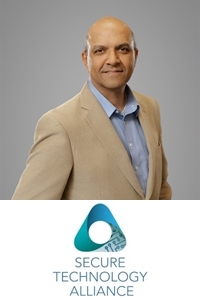
Digital travel credentials: Why does ICAO matter and what does the future hold?
Passkeys at PayPal - learnings, best practices and beyond!
In this session, we'll share PayPal's journey deploying Passkeys across our platforms, reaching millions of customers worldwide. If you're interested in passwordless authentication or planning your own passkey implementation, we'd love to see you there.


Re-engineering public finance: How state-led digital identity can reduce fraud and transform government payments
- Examine the scale of fraud and improper payments and the resulting risks to government fiscal sustainability, audit integrity and public accountability, as responsibility shifts to states delivering public funds at the “last mile”
- Assess how current anti-fraud efforts focused on securing large stores of personal data and expanded data-sharing across government may reinforce system vulnerabilities and create new points of interception for bad actors
- Distinguish between continuously verified, centralized-controlled identity models (e.g., many of the current state-led mobile driver’s licenses initiatives) and privacy-first approaches that use decentralized architecture and cryptography to minimize reliance on centrally stored personal data
- Introduce how emerging technologies—including blockchain, decentralized identity frameworks, cryptography, AI, and biometrics—enable new models of verification, control, and auditability without exposing underlying personal data
- Discuss the need to integrate identity directly into payment infrastructure using decentralized privacy-preserving, cryptographic methods to reduce fraud and improve transparency
- Highlight practical, state-led pathways for modernizing public finance through incremental implementation and public-private collaboration
SXSW case study - Event credentials without a fence
Each March SXSW takes over Austin, TX with no fence line, no pre-registration required, and no limit to the kinds of events. From star-studded red carpets and 4-story-tall vending machines to one-on-one mentor sessions and VR experiences, a unique event has unique credentialing demands. This talk will dive into the process of delivering a credentialing and access control system that equally serves a Music Festival, a Film Festival, and a Conference all while providing real-time analytics and event safety controls.


































































































































GET INVOLVED AT IDENTITY WEEK AMERICA



Created by


Terrapinn is proud to be a member of isla.
Working together to build sustainable events