Paula Naughton | Founder
The Join Our Boys Trust
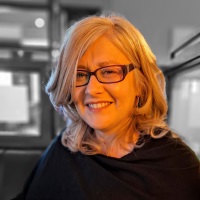
Paula Naughton is a Nurse Practice Development Cordinator at The Health Service Executive (HSE) in Ireland and the Founder of The Join Our Boys Trust. A Registered General and Mental Health Nurse with a MSc in Mental Health. She has practiced extensively as a Specialist Practitione in community mental health services in the UK and ireland and has spent the majority of her career advocating for evidence based treatments for service users. In Novemebr 2012 and without warning, her three young sons were all diagnosied, with Duchenne Muscular Dystrophy (DMD), on the same day. Confronted with a disease she had never previously encountered; Paula mobilised her community in the west of Ireland, to launch The Join Our Boys Trust, in 2014. Under her leadership the Trust has rasied awareness about the disease and funded vital translational research projects aiming to develop Gene and Cell based Therapy programmes for human clinical trials. No one in the Trust is paid a salary or expenses. A fierce chapion for regulatory reform, Paula has served on the Eurodis Duchenne Clinical Advisory Board as well as planning and hosting two International Duchenne Conferences in Dublin. Following the devestating loss of her eldest son Archie, to heart failure in 2022, Paula has channelled he grief into urgent action. She is a vocal advocate for accelerating the approval, reimbursement, and delivery of orphan drugs to the estimated 400 million people worldwide living with a rare disease. Paula's profound family journey and tireless advocacy are the subject of a highly anticipated forthcoming documentary exploring the authentic lived experience of Duchenne Muscular Dystrophy.
Appearances:
Day 1 @ 14:40
Panel: Archie’s Wish: Translating the Reality of Duchenne into Systematic Change
Patient engagement and lived experience are frequently evoked across the rare disease
ecosystem, yet they too often remain on the margins of actual decision-making. This persistent
gap exists primarily because capturing the complex, deeply nuanced day-to-day reality of a rare
condition is inherently diFicult to translate into conventional frameworks. This session breaks
through that barrier by introducing a powerful, perhaps unprecedented piece of qualitative
evidence: a five-year longitudinal study in the form of a feature-length documentary following a
family navigating Duchenne Muscular Dystrophy (DMD).
The film captures the lived experience of three boys, all suFering from DMD, one of whom
tragically passes away during filming. The film will be broadcast throughout Europe next year
and released in cinemas internationally, ensuring that this critical issue reaches the general
public and mobilizes widespread support for improved access, care, and inclusion for rare
disease patients and their carers. It is our hope that this intimate qualitative record can serve as
a practical tool to drive systemic change—specifically targeting expanded ACCESS to
treatments, optimized clinical CARE pathways, and true community INCLUSION for rare
disease families.
Created by

Terrapinn is proud to be a member of isla.
Working together to build sustainable events