Julia Hammett-Jamart | Managing Director
Catalyst
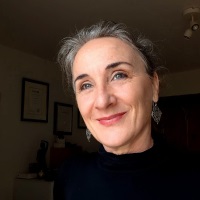
Dr. Julia Hammett-Jamart Ph.D. is the Managing Director of Catalyst and a pioneering impact producer who works with filmmakers to drive real-world policy and social change. Her presence at the World Orphan Drug Congress stems from her role as the Impact Producer for Sky’s the Limit, a forthcoming documentary exploring the lived experiences of three boys with Duchenne Muscular Dystrophy. Her aim is to bridge the gap between patient narratives and institutional action, amplifying the film's core messages to provoke global engagement regarding access to treatment, care, and inclusion for rare disease communities. More info about the film here --> https://skysthelimitfilm.org
A pioneer of the French impact production sector (Catalyst was recently named Finalist in The 6th Annual Anthem Awards for groundbreaking impact campaigns in Human & Civil Rights), Dr. Hammett-Jamart brings a wealth of pluridisciplinary expertise in film production, international policy, and education across European, Australian, and African contexts. Her background includes serving as a senior executive at the Australian Film Commission and Screen Australia, publishing the definitive text European Film and Television Co-production: policy and practice (Palgrave Macmillan 2018), and consulting for high-level institutions such as the European Audiovisual Observatory (Council of Europe). She holds a PhD in Social Sciences, Media and Communication, and in 2025, she inaugurated France's first dedicated university course in impact producing and sustainability at the Université de la Sorbonne Nouvelle, a course she now also leads at the National Audiovisual Institute in Paris (INA).
Her recent impact portfolio features critically acclaimed, multi-award-winning projects including Zinder and the Oscar®-qualifying documentary Inside Gaza. With Sky’s the Limit slated for broadcast on ARTE and SWR in 2027 alongside a global theatrical release, Dr. Hammett-Jamart is actively leveraging the project to engage top-tier policymakers, with upcoming high-level screenings scheduled for Members of the EU Parliament and in the planning for the United Nations Committee on the Rights of Persons with Disabilities.
Appearances:
Day 1 @ 14:40
Panel: Archie’s Wish: Translating the Reality of Duchenne into Systematic Change
Patient engagement and lived experience are frequently evoked across the rare disease
ecosystem, yet they too often remain on the margins of actual decision-making. This persistent
gap exists primarily because capturing the complex, deeply nuanced day-to-day reality of a rare
condition is inherently diFicult to translate into conventional frameworks. This session breaks
through that barrier by introducing a powerful, perhaps unprecedented piece of qualitative
evidence: a five-year longitudinal study in the form of a feature-length documentary following a
family navigating Duchenne Muscular Dystrophy (DMD).
The film captures the lived experience of three boys, all suFering from DMD, one of whom
tragically passes away during filming. The film will be broadcast throughout Europe next year
and released in cinemas internationally, ensuring that this critical issue reaches the general
public and mobilizes widespread support for improved access, care, and inclusion for rare
disease patients and their carers. It is our hope that this intimate qualitative record can serve as
a practical tool to drive systemic change—specifically targeting expanded ACCESS to
treatments, optimized clinical CARE pathways, and true community INCLUSION for rare
disease families.
Created by

Terrapinn is proud to be a member of isla.
Working together to build sustainable events