Faye Adams | Free Lance writer
ATTR- CM Patient-Columnist
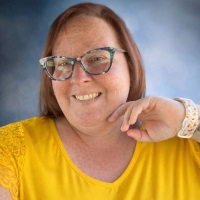
I am first and foremost a wife to the love of my life and a mama to two incredible teenage boys. I am a sister, a daughter, an aunt, and a friend. Those roles are the most important parts of who I am — and how I want to be remembered. I am also living with hereditary ATTR amyloidosis, the same disease that took my dad’s life in 2010. Amyloidosis affects my heart, my stomach, and my nerves. There is no cure yet — at least not here on earth — but there are treatments that can slow the progression. I am currently on medication, doing everything I can to fight back. Still, this disease has a way of reminding me that it doesn’t always follow the rules. When people ask what amyloidosis is, I explain it this way: our bodies make a protein in the liver. Mine misfolds. Instead of working the way it should, it turns into a sticky, glue-like substance that travels through my body and settles in my organs and nerves. Over time, that “glue” makes things harder for my body to function the way it was designed to. I live daily with the reality of a progressive, life-limiting disease — but I also live with purpose. I advocate because my dad didn’t have the treatment options I do. I advocate because too many people go undiagnosed for far too long. I advocate because research matters, awareness matters, and patient voices matter. This diagnosis is part of my story, but it is not the whole story. I am still raising my boys. I am still loving my husband. I am still showing up. I am still fighting. And I will continue to use my voice until there is a cure. Thank you for walking this road with me.
Appearances:
Day 2 - World Orphan Drug Congress USA 2026 @ 14:00
Beyond Awareness: Translating Lived Experience into Regulatory Evidence
The rare disease ecosystem is undergoing a strategic shift from general awareness to actionable
advocacy. While patient voices are increasingly invited into drug development, regulators and HTA
bodies still struggle to translate lived experience into recognized evidence.
This panel examines how specialized rare disease media—specifically Rare Disease
Advisor—transforms patient narratives into actionable “human data.” Through curated patient
columns, RDA creates a validated, public record of patient-reported outcomes that informs endpoint
development, supports PFDD initiatives, and shortens the diagnostic odyssey. Panelists will explore
how media can serve as a strategic partner in clinical development, regulatory decision-making, and
early disease recognition.


Created by

Terrapinn is proud to be a member of isla.
Working together to build sustainable events