Boris Sevarika | CEO
NanoZymeX
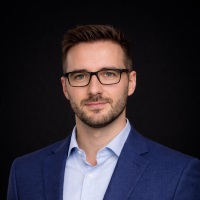
Boris Sevarika is a pharmacist and nanomedicine scientist driven by the question of how biological therapies can be delivered more effectively to patients. Originally from Belgrade, Serbia, he completed his secondary education at the Third Belgrade Grammar School before moving to Germany in 2016 to study pharmacy at Heidelberg University, where he obtained his license to practice as a pharmacist in 2021. Boris later completed a Master’s degree in pharmacy at Saarland University, conducting his Master’s thesis at the Massachusetts Institute of Technology (MIT) in the Ribbeck Lab, where he worked on nanoparticle-based strategies for mucosal drug delivery and transport across biological barriers. He subsequently moved to Switzerland for his PhD at the University of Basel, joining the Nanopharmaceutical and Regulatory Science Group under Prof. Scott McNeil. During his doctoral research, Boris began working extensively on enzyme formulation and lipid nanoparticle–based delivery technologies for lysosomal storage diseases, focusing on how enzyme–lipid interactions, particle design, and biological barriers influence cellular uptake, lysosomal targeting, and immune recognition of therapeutic enzymes. In parallel with his academic work, Boris became increasingly engaged in translating these insights beyond the laboratory. He initially joined the Ancile team, a project focused on nano-based antibacterial surface coatings originating from the University of Geneva. When that project was discontinued, he redirected his efforts toward therapeutic enzyme delivery, building on his PhD research to address unmet needs in lysosomal storage diseases. This transition marked the beginning of NanoZymeX, which he founded to develop next-generation enzyme replacement therapies that integrate nanomedicine engineering with biological and translational considerations from the outset. Today, Boris leads the scientific and strategic development of the platform, aiming to improve efficacy, reduce immunogenicity, and establish more realistic, delivery-centered approaches to rare disease therapeutics.
Appearances:
Day 1 - World Orphan Drug Congress USA 2026 @ 13:05
Pitch 3: NanoZymeX


Created by


Terrapinn is proud to be a member of isla.
Working together to build sustainable events