Simon Lund | Principal Engineer
Samsung Electronics
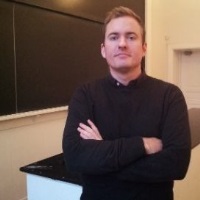
Simon A. F. Lund is a Principal Engineer at Samsung Electronics, where he leads the Systems Advancement and Integration (SAI) group and the Accelerator-integrated Storage I/O (AiSIO) project. His work focuses on open, portable system-software architectures for integrating storage with GPUs and other accelerators, spanning peer-to-peer data movement, user-space and kernel-bypass I/O, file-system integration, and accelerator-initiated storage access. He is the lead developer of the open-source xNVMe project and has a background in storage systems, high-performance compilers, runtime systems, and architectures for massively parallel computing. Simon holds a Ph.D. from the University of Copenhagen.
Appearances:
Future of Memory and Storage - Day 3 @ 09:45
Panel Discuss - Storage in Accelerator-Centric Architectures
Domain-specific accelerators such as GPU, TPUs, xPUs already dominate the servers being deployed in hyperscale AI factories. This has posed a sea change in hardware and software, from infrastructure and architecture to deployed applications.
In the past few years, we have seen different approaches to incorporate storage into these new AI-centric architectures. Some focused on maintaining current applications and leveraging peer-to-peer capabilities between accelerators and SSDs (e.g.,GPU-Direct Storage), and some aiming at re-designing the I/O path, with accelerators directly issuing low level NVMe Commands (e.g., Nvidia's StorageNext/SCADA initiative, SNIA's Storge.ai).
In this panel, we will cover the SOTA on how storage is to evolve in accelerator-centric architectures. Here, we will hear from the experts in the frontline about new advancements on both the hardware and the ecosystem side, and we will have the opportunity to hear their perspectives on questions from both moderators and the audience.


Created by


Terrapinn is proud to be a member of isla.
Working together to build sustainable events