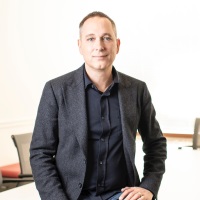
Javier Gonzalez | Principal Engineer | Head of Open-Ecosystem
Samsung Electronics

I lead Samsung Semiconductor's Global Open-ecoSystem Team (GOST - https://tinyurl.com/SamsungGOST), where I am responsible of our ecosystem activities and manage a distributed team of highly talented engineers. This includes defining our vision, strategy, internal / external communication, and day-to-day execution. I am also the founder and site manager for Samsung Semiconductor Denmark Research (SSDR) - Samsung’s Memory Solutions first R&D center in Europe and fifth worldwide. I am a Ph.D in operating systems with a strong background in technical leadership, experimental research, and Linux Kernel development. My interests lay primarily in the hardware / software co-design space, where systems, hardware architecture, and open-ecosystem meet. I am dedicated to defining safe environments for motivated software engineers to be creative and get things done. I am a contributor to a wide range of open source projects including the Linux Kernel. I have also contributed to industry standards through the NVMe, SNIA, and OCP specifications. I am a regular speaker at several top industry and academic conferences. @media screen {}
Appearances:
Future of Memory and Storage - Day 1 @ 09:45
Panel Discussion – The Open Flash Platform (OFP): Building the Flash Architecture AI Demands
AI doesn’t just need more storage—it needs the right medium. Flash brings the essentials: density, speed, and performance per watt, with lower heat penalties than spinning media at comparable throughput. The question is whether today’s architectures let flash behave like the AI-optimized resource it actually is.
The Open Flash Platform (OFP) initiative is unlocking those inherent flash advantages at rack scale—reducing unnecessary data-path hops, minimizing CPU and DRAM overhead, and improving determinism for latency-sensitive AI pipelines. In this panel, ecosystem leaders will separate what’s real from what’s hype: where OFP delivers immediate wins (throughput-per-watt, density, and predictable performance) and which workloads and deployment patterns will adopt first—from AI training and inference to high-throughput analytics and content pipelines.
Panel Topics:* Eliminating overhead: fewer hops, less CPU/DRAM tax, more predictable latency* AI pressure test: feeding GPUs with consistent throughput and QoS isolation* Deployment models: hyperscale, enterprise, and hybrid designs that simplify operations* What must standardize next: observability

Future of Memory and Storage - Day 2 @ 08:35
Enabling the NVMe Atomic Ecosystem
Modern Solid State Drives (SSDs) are increasing the Indirection Unit (IU) to meet growing density and capacity demands. The Linux LBS framework already allows applications to fully utilize these devices and avoid performance-limiting read-modify-write operations. This work extends that foundation by enabling Linux to leverage new hardware atomic capabilities in SSDs, providing application-level data integrity guarantees to avoid torn writes without the overhead of software-based solutions. We are specifically targeting optimizations in PostgreSQL. By offloading atomicity to the device, we aim to reduce write amplification, improve data reliability, and increase performance.
Future of Memory and Storage - Day 3 @ 09:45
Panel Discuss - Storage in Accelerator-Centric Architectures
Domain-specific accelerators such as GPU, TPUs, xPUs already dominate the servers being deployed in hyperscale AI factories. This has posed a sea change in hardware and software, from infrastructure and architecture to deployed applications.
In the past few of years, we have seen different approaches to incorporate storage into these new AI-centric architectures. Some focused on maintaining current applications and leveraging peer-to-peer capabilities between accelerators and SSDs (e.g.,GPU-Direct Storage), and some aiming at re-designing the I/O path, with accelerators directly issuing low level NVMe Commands (e.g., Nvidia's StorageNext/SCADA initiative, SNIA's Storge.ai).
In this panel, we will cover the SOTA on how storage is to evolve in accelerator-centric architectures. Here, we will hear from the experts in the frontline about new advancements on both the hardware and the ecosystem side, and we will have the opportunity to hear their perspectives on questions from both moderators and the audience.

Created by


Terrapinn is proud to be a member of isla.
Working together to build sustainable events