Melanie Lendnal | Senior Vice President, Policy & Advocacy
The ALS Association
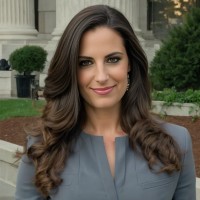
Melanie Lendnal, Senior Vice President, Policy & Advocacy, The ALS Association

Melanie Lendnal is the Senior Vice President of Policy & Advocacy at the ALS Association, where she leads the organization’s public policy efforts to make ALS a livable disease while working to find a cure. The organization works at all levels of government and in all branches of government in pursuit of that goal. Before coming to the Association, Melanie built and led the state government affairs team at the American Kidney Fund. In her previous roles, Melanie spearheaded and implemented national campaigns at various non-profit organizations to combat hate groups, hunger, homelessness, human trafficking, and animal cruelty. To date, her leadership has led to the passage and finalization of dozens of federal laws and rules, hundreds of state laws and local ordinances, and executive orders. She began her career as a journalist at Meet the Press and Dateline NBC before becoming an Emmy award-winning reporter and anchor at several television stations across the country. Lendnal is a licensed attorney in the state of Maryland. She earned her law degree from the University of the District of Columbia David A. Clark School of Law and her Bachelor of Arts degree in political science from Tufts University. She lives in Maryland with her husband and two daughters.  

Appearances:


Day 2 - World Orphan Drug Congress USA 2026 @ 12:40

Collaborating for Coverage: How Industry, CMS, and Patients Can Advance Access to Orphan Drugs

Access to orphan drugs often hinges on how well manufacturers, policymakers, and CMS can coordinate around evidence expectations, payment models, and patient needs. This panel will examine emerging CMS policies that shape access—from coverage pathways for accelerated-approval therapies to reforms in Medicare, Medicaid, and value-based arrangements. Experts will explore practical approaches for engaging CMS earlier, aligning evidence generation with regulatory and reimbursement expectations, and improving coverage consistency for rare disease patients. The discussion will highlight opportunities for partnership that balance innovation, affordability, and patient access. 


Objectives 

  • Highlight key CMS policies influencing orphan drug access, including coverage frameworks, evidence requirements, and state-level Medicaid considerations. 
  • Explore strategies for early and effective CMS engagement to ensure smoother transitions from approval to coverage 
  • Examine challenges specific to rare and ultra-rare conditions, such as limited data sets and small populations, and how CMS can adapt appropriately. 
  • Identify collaborative approaches—including value-based contracts, demonstration programs, and alternative payment models—that can expand access while managing cost pressures. 
last published: 06/Mar/26 21:05 GMT

back to speakers

Get Involved At World Orphan Drug Congress USA


Connect with us


To Sponsor Or Exhibit


Jack Rendell
jack.rendell@terrapinn.com
t/ +44 07577689029


To Speak


Kaylee Nguyen
kaylee.nguyen@terrapinn.com


Marketing & Press


Jasper Cameron
jasper.cameron@terrapinn.com