Zhenyu Shu | Technical Lead, High-Performance Storage Systems
RedNote
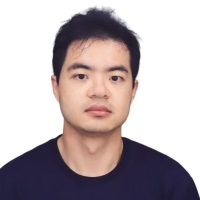
Shu Zhenyu is a Technical Lead for High-Performance Storage Systems at Xiaohongshu Inc. (RedNote), responsible for the design and development of data-center-scale storage infrastructure serving object, file, and AI training workloads. His work spans distributed storage architecture, storage engines, SPDK, NVMe SSDs, RDMA networking, and flash storage technologies. He focuses on improving the efficiency and scalability of large-scale distributed storage systems, with particular emphasis on checkpoint and dataset I/O for GPU training clusters. His recent work focuses on next-generation storage technologies, including FDP-enabled storage architectures, QLC SSD deployment, storage performance optimization, and software-hardware co-design. He is particularly interested in translating advances in flash storage technologies into practical gains for distributed storage systems, enabling higher performance, lower write amplification, and greater efficiency at scale.
Appearances:
Future of Memory and Storage - Day 3 @ 14:25
Optimized solutions for Large capacity QLC eSSD in AI era
Flexible Data Placement (FDP) is redefining how large-capacity QLC SSDs can be deployed in modern data centers in this AI era, enabling more efficient data placement and improved system-level optimization.This presentation explores how large-capacity QLC SSDs are evolving to meet the rapidly growing storage demands of AI infrastructure. As AI training and inference workloads scale, data centers require higher storage density, stable performance, and better cost efficiency. While QLC SSDs offer significant capacity advantages, unlocking their full potential requires architectural innovation and host–SSD collaboration.In this session, DapuStor will explain the core principles of FDP and how host-controlled data placement improves the efficiency of large-capacity QLC SSDs. By coordinating data streams between the host and SSD, FDP reduces write amplification, improves performance consistency, and enhances endurance in high-density architectures. The presentation will also discuss how these mechanisms support stable QoS and reliable operation in large-capacity QLC deployments for AI-era data centers, and eventually help reduce the total cost of ownership for end customers.


Created by


Terrapinn is proud to be a member of isla.
Working together to build sustainable events