Uksong Kang | VP, Head of Next Generation Product Planning
SK hynix
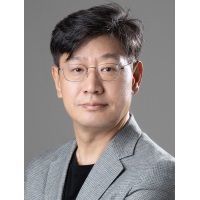
Uksong Kang is Vice President at SK hynix, where he leads the Next Generation Product Planning Team and is responsible for defining future memory and storage products and their associated strategies. Drawing on his prior leadership experience in DRAM Product Planning and DRAM Design, he brings deep expertise in memory product strategy, technology roadmaps, and system-driven product definition. Over more than 30 years in the semiconductor industry, he has worked across product planning, design, and architecture, combining technical depth with strategic product insight. He received his Ph.D. in Electrical Engineering from the University of Michigan, Ann Arbor, and his B.S. and M.S. degrees in Electrical Engineering from Seoul National University, Korea.
Appearances:
Future of Memory and Storage - Day 1 @ 13:20
Orchestrating Efficient AI Infrastructure through Tiered Memory in the Era of Agentic AI
As the AI landscape rapidly evolves from chatbot-based services to AI agents, token consumption is increasing at an unprecedented pace. This surge is intensifying bottlenecks between xPUs and memory/storage systems, shifting the primary determinant of system performance from pure compute capability to data movement and memory/storage efficiency. As a result, AI infrastructure is entering a memory-centric era.
This session presents a tiered memory orchestration vision for next-generation AI infrastructure. A key approach to resolving these data bottlenecks is the introduction of new tiers within the hierarchical memory system. In addition to the conventional G1/G2/G3 memory hierarchy, future systems can incorporate G0.5, G1.5, and G2.5 tiers to enhance service quality, improve overall system performance, and optimize cost efficiency. These tiers can be implemented through technologies such as 3D-stacked DRAM on xPU, high-bandwidth flash, and CXL-based memory pooling, respectively.
At the same time, AI-oriented storage is evolving to meet emerging workload requirements. Next-generation storage solutions are being developed to process KV cache data with higher performance than conventional storage, while high-capacity QLC products are being advanced to provide scalable and cost-effective storage. Together, these technologies will play a critical role in overcoming memory and storage bottlenecks in the era of agentic AI.

Created by


Terrapinn is proud to be a member of isla.
Working together to build sustainable events