Daniel Worledge | Distinguished Research Scientist Senior Manager, MRAM
IBM
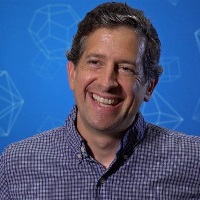
Daniel Worledge is a Distinguished Research Scientist and the Senior Manager of MRAM at the IBM Almaden Research Center. He leads teams in Yorktown Heights and Albany in New York, and in San Jose in California, doing scientific research and technology development of magnetoresistive random access memory (MRAM). From 2000 to 2015, Dr. Worledge worked at IBM’s T. J. Watson Research Center, where he made the first perpendicular CoFeB|MgO tunnel junctions and led the IBM team that demonstrated the first integrated perpendicular Spin-Transfer-Torque MRAM, with ultra-low write-error-rate. In 2001 he invented and developed Current-in-Plane Tunneling as a fast turn-around measurement method for magnetic tunnel junctions. Dr. Worledge received a BA with a double major in Physics and Applied Mathematics from UC Berkeley in 1995, receiving the Department Scholar Award in physics and the Dorothea Klumpke Roberts Prize in mathematics. He then received a PhD in Applied Physics from Stanford University in 2000, with a thesis on spin-polarized tunneling in oxide ferromagnets, measuring the largest tunneling spin-polarization in (LaSr)MnO3 and the first negative tunneling spin-polarization in SrRuO3. He received the 2025 IEEE Cledo Brunetti Award, four IBM Outstanding Technical Achievement Awards, three IBM Outstanding Innovation Awards, and the IBM Research Client Award. Dr. Worledge is a Fellow of APS and IEEE, and a member of the National Academy of Engineering.
Appearances:
Future of Memory and Storage - Day 2 @ 10:15
MRAM: Advancing Next-Generation Memory Through Industry Collaboration
As traditional memory technologies approach physical and economic limits, new non-volatile memory technologies are becoming increasingly critical. SNIA’s recently launched MRAM Alliance Special Interest Group (SIG) brings together stakeholders across the semiconductor and systems ecosystem to accelerate adoption and align on implementation priorities.
The initiative focuses on collaboration across the full value chain—from foundries to system vendors—to improve awareness, enable standards where appropriate, and facilitate real-world product deployment.
This section will highlight the role of MRAM in future memory hierarchies, work to identify storage-centric use cases, and how SNIA is enabling ecosystem alignment to bring next-generation memory technologies into production systems.

Created by


Terrapinn is proud to be a member of isla.
Working together to build sustainable events