Larry Callahan | Chief Scientist
Autopoiesis Sciences
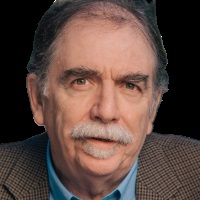
Dr. Larry Callahan is Chief Scientist at Autopoiesis Sciences, an AI research lab building systems capable of autonomous scientific discovery. He leads the scientific vision behind the company's flagship platforms, including Aristotle, an AI co-scientist that achieved 92.4% accuracy on GPQA Diamond, a PhD-level scientific reasoning benchmark, and 96.1% on SimpleQA, OpenAI's factuality benchmark, outperforming leading AI systems while addressing the calibration problem that limits most reasoning models; and Columbus-1, the company's first autonomous research system, trained on scientific judgment. A chemist by training, Dr. Callahan earned his Ph.D. in chemistry from the University of Chicago. His career spans nucleic acid chemistry, HIV research, and the development of analytical methods for biotechnology-derived products. He has held pivotal scientific and management roles at the FDA, NIH, and the United States Pharmacopeia, where his innovations advanced research infrastructure and improved standards in pharmaceutical science. Dr. Callahan is the primary editor of the ISO 11238 substance identification standard (IDMP) and led the development of the Global Substance Registration System (GSRS), the FDA framework that assigns unique identifiers to every substance in FDA-regulated products and links them to clinical trials, products, and adverse events. He currently serves as platform lead for the Global Substance Knowledge System (GSKS), which extends the GSRS framework by integrating Aristotle's AI co-scientist capabilities to structure and enrich substance data. The GSKS is designed to enhance drug discovery, clinical studies, regulatory submissions, global supply chain integrity, and medication management.
Appearances:
Day 2: 29th October @ 14:05
How Aristotle Embeds Systematic Doubt into AI Scientific Reasoning
Modern AI models are fluent but often confidently wrong, a fatal flaw for scientific work. Today, we introduce Aristotle, the AI co-scientist from Autopoiesis Sciences, built around calibration: the ability to distinguish what it knows from what it doesn't. We focus on two core mechanisms. Peer Review, a verification layer that embeds procedural self-skepticism directly into the reasoning process, and Dynamic Inline Definitions (DIDs), which ground terminology precisely within scientific context. This approach helped Aristotle achieve 92.4% accuracy on GPQA Diamond, a PhD-level scientific reasoning benchmark, and 96.1% on SimpleQA, outperforming every major AI system while solving the calibration problem. Attendees will learn why systematic doubt is essential for trustworthy AI-driven discovery.
GET INVOLVED
For conference production and speaking opportunites:
For sponsorship and exhibition opportunities:


Created by


Terrapinn is proud to be a member of isla.
Working together to build sustainable events