Thomas Coughlin | President
Coughlin Associates, Inc.
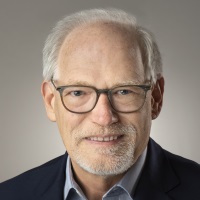
Tom Coughlin, President, Coughlin Associates is a digital storage analyst and business/ technology consultant. He has over 40 years in the data storage industry with engineering and senior management positions. Coughlin Associates consults, publishes books and market and technology reports and puts on digital storage and memory-oriented events. He is a regular contributor for forbes.com and M&E organization websites. He is an IEEE Fellow, 2024 IEEE President, Past-President IEEE-USA, Past Director IEEE Region 6 and Past Chair Santa Clara Valley IEEE Section, and is also active with SNIA, SMPTE and CNSV. For more information on Tom Coughlin go to www.tomcoughlin.com.
Appearances:
Future of Memory and Storage - Day 1 @ 11:00
Chair’s Welcome
Future of Memory and Storage - Day 1 @ 11:40
FMS Lifetime Achievement Award

Future of Memory and Storage - Day 3 @ 09:45
Panel Discussion - Breaking the Memory Wall with High Bandwidth Flash
A precise abstract will be provided after approvals from the participating companies, est end of 1st week of March. Below is a placeholder:As AI Large Language Models (LLMs)—continue to scale up in size, the industry has collided with the "Memory Wall", with memory bandwidth and capacity growth limitations, leading to severe bottlenecks in AI inferencing performance, energy efficiency, and total cost of ownership (TCO). This panel explores the emergence of High Bandwidth Flash (HBF) as a disruptive architectural shift designed to bridge the gap between volatile HBM (High Bandwidth Memory) and traditional NAND storage.The session will discuss how HBF technology aims to redefine the memory hierarchy by providing near-memory speeds with the density and persistence of high bandwidth flash. The panel will bring together experts from both HBM/HBF solution providers, as well as Hyperscale- AI Infrastructure provider, to dissect the HBF technology usage and development needed for success, including Architectural Integration, Technical Challenges, Standardization timelines, performance and economics.

Future of Memory and Storage - Day 3 @ 15:10
How New Memory Technologies Will Revolutionize Hardware and Software
Today’s computing systems are facing a number of challenging roadblocks, and these will bring new memory types – MRAM, ReRAM, FRAM, and PCM – into widespread use in all levels of computing system. Join this session to learn how these technologies promise to change the way that tomorrow’s computers will approach data processing as they provide persistent storage not only near the processor, but even within the processor itself. Learn the effect this will have on processor price/performance and how system architecture will take advantage of these new technologies to manage data in altogether new and better ways.
Created by


Terrapinn is proud to be a member of isla.
Working together to build sustainable events