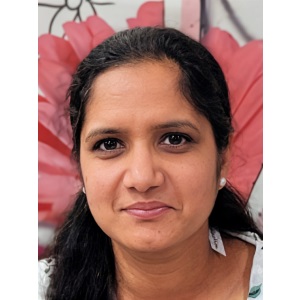
Rachana Khamamkar | Senior Engineer
Qualcomm

Rachana Khamamkar is an embedded software engineer at Qualcomm Technologies, Inc. on the Core Boot team, where she develops Primary Boot Loader software for production platforms. Her work sits at the intersection of boot architecture and storage technology, enabling reliable storage access at the earliest stages of system initialization. She has contributed to storage and boot enablement across a variety of platforms, including UFS integration and early-boot storage readiness. Before joining Qualcomm, Rachana worked as an SSD firmware engineer at Toshiba, giving her perspective across both storage device firmware and host-side boot software.
Appearances:
Future of Memory and Storage - Day 3 @ 10:05
A Compatibility‑First Approach to HS‑LSS: Faster UFS Boot Without Ecosystem Disruption
High Speed Link Startup Sequence (HS‑LSS) is an emerging UFS capability that reduces storage bring‑up latency and can improve end‑to‑end boot KPIs. Ecosystem readiness varies, so SoCs must support both HS‑LSS and legacy LS‑LSS during a multi‑generation transition to maintain compatibility. This presentation describes Qualcomm’s production enablement of HS‑LSS with deterministic early‑boot selection across mixed UFS device configurations. Because devices may power up expecting HS‑LSS or LS‑LSS depending on hardware configuration, the host must select the correct startup sequence early—before any stage that depends on storage access. Our architecture makes this choice OEM‑selectable while reusing existing boot‑configuration mechanisms (no dedicated GPIO and no one‑time fuse/SKU lock‑in). Results demonstrate measurable improvements in time‑to‑UFS‑ready and boot-path determinism while maintaining backward compatibility, with a clear path to retire LS‑LSS support as adoption matures. Since link startup can occur multiple times (cold boot, warm reboot, recovery), the startup-time gains can compound linearly over a platform’s operational lifetime.
Created by


Terrapinn is proud to be a member of isla.
Working together to build sustainable events