Ashish Jha | Co-Founder & CEO
BioRadar
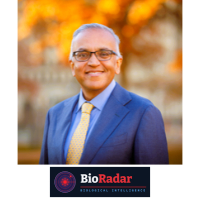
CO-FOUNDER & CEO, BIORADAR · SENIOR FELLOW, HARVARD BELFER CENTER · FORMER WHITE HOUSE COVID-19 RESPONSE COORDINATOR
Dr. Ashish K. Jha is a physician, scientist, and national security strategist working at the intersection of biosecurity, medicine, and emerging technology. He is Co-Founder and CEO of BioRadar, a biointelligence company integrating environmental pathogen surveillance and AI-driven analytics to give governments and health systems real-time early warning of biological threats — building the detection infrastructure the country does not yet have. He is also a Senior Fellow at Harvard’s Belfer Center, where his work focuses on biosecurity and pandemic preparedness.
An accomplished practicing physician, Dr. Jha is widely recognized as a trusted voice on biosecurity and major health issues. A long-time leader in pandemic preparedness and response — from directing pioneering research on Ebola to serving on the frontlines of COVID-19 — he has advised policymakers and institutions worldwide, including the OECD, the Pontifical Academies, and the National Academy of Medicine.
In March 2022, President Biden appointed Dr. Jha as White House COVID-19 Response Coordinator, calling him “one of the leading public health experts in America.” In that role, he expanded access to treatments and updated vaccines, strengthened testing and surveillance, rebuilt the national stockpile, and drove major investments in indoor air quality, earning bipartisan praise for his pragmatic leadership.
Dr. Jha is among the most highly cited health scholars in the United States, with more than 300 publications in leading journals including The Lancet, NEJM, JAMA, and The BMJ. His research focuses on improving the quality and affordability of care through policy innovation in the U.S. and globally. He appears regularly at public forums, is sought out by the media for commentary on a wide range of health topics, and has testified before Congress and state legislatures.
Previously, Dr. Jha served as Dean of the Brown University School of Public Health. Prior to Brown, he was the K.T. Li Professor of Global Health at the Harvard T.H. Chan School of Public Health, Professor of Medicine at Harvard Medical School, and Director of the Harvard Global Health Institute.
Appearances:
Main Conference Day 3 - 11th March @ 14:20
Closing Keynote: Reimagining public health infrastructure in the USA – opportunities to rebuild with intention
- li>
- I. Shifting from Emergency Architecture to Systemic Renaissance: Moving away from building temporary infrastructure out of active crises toward an intentional, permanent redesign of the U.S. health system, balancing high-level research and policy frameworks with community-level operational continuity.
- Next-Gen Surveillance, Pathogen Forecasting & Data Interoperability: Addressing the structural separation between public health and daily healthcare delivery. Exploring how the U.S. moves away from passive, survey-based reporting toward an interoperable architecture using AI-driven pathogen forecasting, laboratory modernization, and integrated electronic health record (EHR) data tracking.
- III. Safeguarding Against Advanced Biothreats & Complex Risks: Assessing national biodefense capabilities against emerging pathogens and modern, complex threats (such as AI-generated viruses). Outlining how federal entities, academic institutions, and biotech innovators can proactively collaborate to get ahead of the global outbreak curve.
- IV. Models of Universal Access & Overcoming Market Friction: Examining existing, successful national models that blend federal support with community access—such as the Vaccines for Children (VFC) and Ryan White HIV/AIDS programs. Discussing how to apply these frameworks to eliminate commercial insurance friction and resolve market access failures for newly approved preventative tools.
- V. Bridging the Gap: From the Loftiest Policy to Frontline Disparities: Contrasting federal policy and scientific research benchmarks with the grittier, day-to-day realities of under-resourced medical clinics and primary care deserts. Detailing how to better arm overstretched frontline clinicians against health misinformation and trust erosion.





Created by


Terrapinn is proud to be a member of isla.
Working together to build sustainable events