Mats Oberg | Associate Vice President, DSP Architecture
Marvell
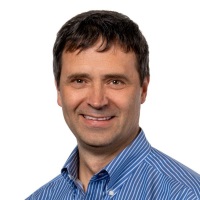
Mats Öberg is Associate Vice President, DSP Architecture at Marvell. He leads research and development of advanced signal processing for SSDs and HDDs, as well as compute and machine learning technologies for next‑generation storage products. Since joining Marvell, Mats has guided the development of read‑channel architectures for perpendicular magnetic recording, TDMR, and optical storage formats including DVD and Blu‑ray. Mats earned his PhD in Electrical Engineering from the University of California, San Diego
Appearances:
Future of Memory and Storage - Day 2 @ 15:50
Can't Live Without Them! What Is Next for HDDs?
HDDs continue to be the backbone of data‑center storage, holding roughly 70% of all deployed data today, while SSDs store around 20% and tape the remainder. With global data creation growing at more than 25% annually through 2030, HDDs will remain the only economically scalable capacity tier. However, the rapid increase in drive density is widening the gap between capacity and performance. While most drives shipped today are under 30 TB, the industry is targeting 100 TB by the end of the decade. Yet sustained throughput remains near 200 MB/s—meaning a full‑drive read can exceed six days. Capacity per drive is rising quickly, but bandwidth per terabyte, IOPS per terabyte, and even power per terabyte continue to trend downward.This talk explores what architectural changes are required to keep HDDs viable as multi‑petabyte building blocks. It will introduce how Marvell is developing new forms of internal parallelism and advances in ML/DSP‑based signal processing can offset the growing performance deficit, and how these techniques reshape the design space for next‑generation HDD‑based storage systems.
Created by


Terrapinn is proud to be a member of isla.
Working together to build sustainable events