Mark Dancho | Distinguished Engineer
Sandisk
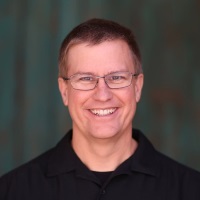
Mark Dancho is a Distinguished Engineer in SSD firmware at Sandisk. He has 15 years of experience as an SSD firmware engineer. Mark has over 20 US patents on SSDs, firmware, and NAND endurance techniques. Mark currently serves as firmware architect for high-capacity SSD storage products, including Sandisk’s SN670 and SN570 SSDs that support capacities up to 245TB. He has expertise across various SSD subsystems.
Appearances:
Future of Memory and Storage - Day 3 @ 09:05
Preserving Granular Indirection at Massive Capacities
As SSD capacities grow to 1PB, how can we keep the SSD indirection unit (IU) from growing? An IU represents the unit at which the SSD tracks host data. Host writes smaller than an IU, typically cause the SSD perform read-modify-write (RMW) operations. Those RMWs are expensive overhead on performance and NAND endurance. Therefore, it is best when the SSD host stack is designed to align with the SSD IU. Typically, SSDs around 32TB or smaller support a 4K IU, but larger SSDs are supporting a 16K or even higher IU. In this talk we explore an SSD architecture preserving the 16K IU, as SSD capacity scales and the potential tradeoffs for doing so. Further, this architecture would enable small form factor drives, such as E3.s, to scale to 256TB. The key change in this architecture is moving the host-data mapping table from DRAM to NAND. This approach breaks the linear growth of SSD DRAM with SSD capacity with the benefits of a consistent 16K IU as drive capacity scales, and more PCB space for NAND, by having less DRAM. We will review measured data from drives showing the tradeoffs in workload with these new reduced-DRAM drives to learn what workloads tradeoffs exist in this architecture.
Created by


Terrapinn is proud to be a member of isla.
Working together to build sustainable events