Hardeep Singh | Principal Thermal Engineer
Solidigm
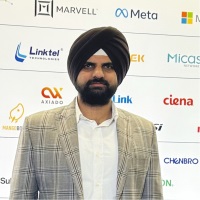
Thermal mechanical Principle Engineer responsible for future thermal solutions for SSD's. This includes integration of SSD's in air, liquid and immersion cooled platforms with an experience of ~15 years working in different industries including turbomachinery, power plants, and semiconductor. Successfully published multiple journal papers and conference papers including presentation in 2022 and 2025 OCP Global Summit, San Jose. Master of Science in mechanical engineering with focus on heat transfer and thermal-fluid analysis.
Appearances:
Future of Memory and Storage - Day 3 @ 09:05
Thermal Evolution for Next-Generation SSDs: From Air to Liquid Cooling and Ena-bling AI Inference at Scale
As data center workloads diversify across storage, compute, and AI platforms, thermal management strategies must evolve to meet distinct operational demands. Traditional air cooling remains viable for conventional storage with moderate power envelopes, while compute-intensive and AI environments increasingly demand direct liquid cooling and immersion solutions for targeted heat extraction at extreme power densities.This presentation quantifies thermal dissipation budgets across cooling technologies—comparing air, direct liquid, and immersion cooling capabilities for current and next-generation SSDs operating at PCIe Gen6 and Gen7 power levels. We examine how each cooling approach aligns with specific platform requirements and power roadmaps. For newer applications like network attached storage used for inference, high-density SSDs are not only nice to have, but requirements. With interface speeds, even at network attached storage, moving from Gen5 to Gen6 and 7, thermal management becomes a priority, especially when massive scale of storage deployment is needed to feed data to AI compute. The session will also cover impact to SSD thermal architecture due to fan-less AI servers.
Created by


Terrapinn is proud to be a member of isla.
Working together to build sustainable events