Haining Liu | Senior Technologist
Sandisk
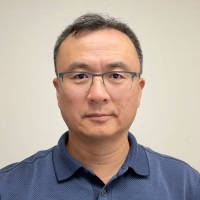
Haining Liu is a senior firmware engineering leader at SanDisk with over 15 years of experience in enterprise SSD. He specializes in firmware architecture, performance optimization, and advanced NAND media management algorithms. His work also emphasizes improving firmware debuggability, scalability, and reliability in SSD firmware design.
Appearances:
Future of Memory and Storage - Day 2 @ 09:05
Functionality-Oriented Debug Logging in SSD Design
As the scale and complexity of enterprise SSD deployments grow, log-based debugging and telemetry support have become increasingly important. Conventional SSD logging solutions are largely “passive”: functional modules rely on a shared logging resource and depend on best-effort servicing. As a result, missing critical log entries is common, forcing developers to rely on speculation to reconstruct behavior, which significantly impacts debug turnaround time.This presentation first examines common logging approaches used in prior SSD designs, then introduces a novel framework from SanDisk Enterprise SSD development that promotes a “proactive” and “plan-ahead” philosophy. Each key SSD function or module owns a distinct logging identity and registers its requirements at the system level. These identities are grouped by feeding characteristics, and log events are collected and stored in isolation through the underlying debug infrastructure during the drive’s lifetime. This approach balances log collection across differing consumption rates and optimizes overall logging storage requirements. We believe the design can greatly improve the the quality and robustness of the telemetry logs.
Created by


Terrapinn is proud to be a member of isla.
Working together to build sustainable events