Yitian Xiao | Global Biologics Product Expert
Datwyler
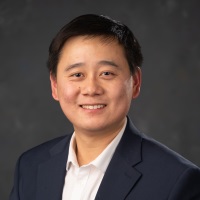
Yitian Xiao is currently a Global Biologics Product Expert at Datwyler and brings a breadth of experience leading thought leadership initiatives supporting the evolving needs of the biologics industry. Prior to this role, he was a Technical and Scientific Expert supporting Datwyler’s customers on their product development needs such as vial, pre-filled syringe, and cartridge applications. He also worked in a commercial development role at Becton Dickinson (BD) providing pharmaceutical customers with consultation on BD products, services, and solutions to meet their development timeline needs. Before BD, he was a combination product R&D engineer at AstraZeneca responsible for managing technical aspects of device development such as test method development, design verification, and validation. Yitian holds a M.Eng in Biomedical Engineering from Cornell University and a B.S. in Biomedical Engineering from Georgia Tech.
Appearances:
Festival of Biologics Day 3 @ 11:40
Novel Plunger Solution to Meet Sensitive Biologics and Processability Needs for Subcutaneous Delivery Systems
Growing adoption of biologics and other sensitive therapeutics is transforming subcutaneous (SC) delivery, as more therapies move toward self-administration to ease reliance on clinical settings and support the push for decentralized, patient-centric care. This trend is placing new demands on drug delivery devices, which must now accommodate doses that fall outside traditional volume limits (≤ 2.25 mL). Formulators often turn to higher concentrations— raising drug viscosity to ≥ 30 cP, demanding larger needles, greater injection force, or frequent doses that compromise patient comfort and adherence. Concentrated formulations also carry greater risk of aggregation and instability, requiring drug-contacting container components to mitigate those risks.
Selecting the right plunger component can be challenging; these elastomeric components must seal a container, support gliding to enable SC drug delivery, and minimize interactions between drug and container surfaces. Plunger geometry, interference fit within a container, trim edge characteristics, and coatings all play a part in minimizing drug interactions, enabling SC drug delivery, and supporting processability in a high-speed fill-finish line. As such, these considerations should be accounted for throughout the product development lifecycle. Here we present learnings on plunger sealing considerations to enable biologics SC delivery and seamless processability in later product development stages.
- Biologics are pushing traditional SC delivery limits. Understand current drug delivery trends and challenges for high viscosity biologics drug delivery.
- Novel components enable device systems to meet SC delivery needs. Learn how to choose the right components for your drug delivery system, e.g. NeoFlexTM plungers, in balancing the needs of sensitive biologics and SC delivery considerations.
- Accounting for fill-finish considerations early in development is key to smooth development timelines. Gather important insights that can impact processability and sortability of plunger components in high-speed fill-finish lines.
Created by


Terrapinn is proud to be a member of isla.
Working together to build sustainable events