Marco Dominietto | Chief Technology Officer
AIGON Health
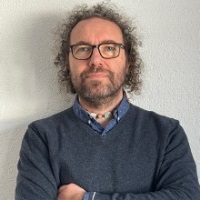
Marco Dominietto, PhD, is a medical physicist and AI researcher working at the intersection of physics, medicine, and artificial intelligence. He has over 20 years of experience in medical imaging, computational modeling, and multimodal data integration, with a focus on developing interpretable, physiology-driven AI systems for complex diseases.
He has worked across leading research institutions, including CERN, ETH Zurich, and the Universities of Zurich and Basel, as well as in clinical settings.
He is the Founder and CEO of Gate To Brain SA and co-founder of Aigon Health, where he leads the development of AI platforms integrating imaging, genomic, and clinical data to model disease behavior and support clinical decision-making. His work emphasizes moving beyond purely correlative approaches toward biologically grounded models capable of generating new insights.
Marco has contributed to multiple patent applications in AI applied to oncology and actively collaborates with clinical and research institutions across Europe
Appearances:
Festival of Biologics Day 2 @ 13:00
Immunotherapy Roundtables
AI-Driven Precision Oncology: Challenges and Future Directions
Festival of Biologics Day 2 @ 17:30
From Tumors to Neurodegeneration: Reconstructing Disease Dynamics with Multimodal AI
Neurodegenerative diseases and cancer, despite their differences, share a fundamental challenge: both are complex, dynamic processes driven by heterogeneous and often latent biological mechanisms. In both domains, artificial intelligence has been widely applied, yet many current approaches remain largely correlative, limiting interpretability and clinical impact.
In this talk, we present a multimodal AI framework designed to integrate imaging, molecular, and clinical data to model disease dynamics over time. Originally developed in oncology to characterize tumor behavior at both local and systemic levels, this approach is here extended to neurodegenerative diseases, where long temporal evolution and subtle biological changes pose additional challenges.
The framework focuses on capturing latent biological processes, enabling the identification of patterns not directly observable through standard clinical assessment. We will discuss how this paradigm supports clinically relevant tasks such as early detection, patient stratification, and prediction of disease trajectories, while maintaining interpretability and alignment with known physiological mechanisms.
Finally, we explore how such models can move beyond prediction toward hypothesis generation, bridging domains and providing a unified perspective on complex diseases, with implications for more personalized and adaptive therapeutic strategies.
Created by


Terrapinn is proud to be a member of isla.
Working together to build sustainable events