Andrzej Dubiel | Senior Scientist I
Selvita
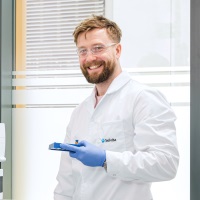
Andrzej Dubiel, PhD is a Senior Scientist specializing in antibody developability and biophysical characterization. He has over eleven years of combined doctoral and postdoctoral research experience across biochemistry, microbiology, structural biology, and biophysics. Over the last three years in the R&D and CRO sector, he has been responsible for establishing, expanding, and delivering developability assessment workflows for therapeutic antibodies. His broad scientific background enables him to integrate structural, biophysical, and developability data to support biologics discovery and candidate selection.
Appearances:
Festival of Biologics Day 2 @ 17:10
Developability of antibodies: challenges and future directions
The rapid expansion of antibody-based therapeutics has intensified the need for robust and predictive developability assessment to ensure a successful transition from discovery to clinical development. Developability encompasses the evaluation of key biophysical and biochemical properties of antibody candidates, including stability, solubility, aggregation propensity, and manufacturability. Despite significant advances in screening technologies, a considerable proportion of otherwise promising candidates continue to fail at later stages due to suboptimal developability profiles.
This presentation will explore the major challenges associated with antibody developability, including the limited predictive power of early-stage screening workflows, the inherent complexity of forecasting long-term stability, and the influence of formulation and environmental conditions on molecular behaviour. Particular attention will be given to the interpretation of biophysical datasets and their effective integration into decision-making processes, especially within a CRO context.
A central theme of this talk will be the urgent need for more standardized, scalable, and predictive methodologies to improve data comparability and decision confidence across programs. Greater adoption of plate-based, high-throughput, and automation-compatible platforms will be highlighted as a key step toward enhancing robustness, reproducibility, and throughput in early developability assessment. In parallel, emerging trends underscore the growing impact of advanced bioinformatical tools and in silico approaches, including sequence- and structure-based analytics, molecular modeling, and the application of machine learning algorithms for predictive developability. Recent advancements in AI-driven models enable improved prediction of stability, aggregation propensity, and manufacturability, supporting more informed candidate selection. Combined with expanded assay portfolios tailored to increasingly complex antibody modalities, these innovations are driving the establishment of standardized, fit-for-purpose strategies aligned with evolving industry needs.
Overall, this presentation aims to provide practical insights into current best practices, identify existing gaps, and outline innovative solutions shaping the future of antibody developability in biologics research and development.
Created by


Terrapinn is proud to be a member of isla.
Working together to build sustainable events