Vineet Parekh | Hardware Systems Engineer
Meta
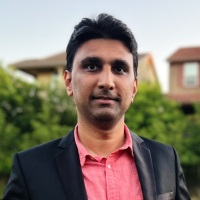
Hardware Systems Engineer at Meta working on design of AI and Compute systems.
Appearances:
Future of Memory and Storage - Day 1 @ 09:05
CXL in Hyperscale Environment
Compute Express Link (CXL) promises to unlock memory disaggregation and composability at hyperscale, but deploying it in production fleets introduces a new class of system-level challenges. In this talk, we share practical insights from hyperscale environments on where CXL meets reality—covering issues such as latency variability, reliability at scale, firmware/software maturity, and observability gaps. We will discuss how these challenges impact large-scale AI and memory-intensive workloads, and outline the validation and design strategies required to make CXL viable in production data centers.
Future of Memory and Storage - Day 2 @ 09:50
Hyperscale Flash Understandings
Hyperscalers are increasingly deploying QLC flash in capacity-oriented tiers, leveraging software intelligence and workload segmentation to maximize efficiency at scale. In large fleet environments, QLC behavior is shaped less by device limitations and more by system-level orchestration, write management, and traffic smoothing. At scale, its performance profile stabilizes under controlled workloads, enabling predictable latency and cost efficiency. This reflects a broader trend where hyperscale architecture, rather than raw media characteristics, defines real-world flash behavior.
Created by


Terrapinn is proud to be a member of isla.
Working together to build sustainable events