Ashis Das | Senior Director, Evidence Intelligence
Komodo
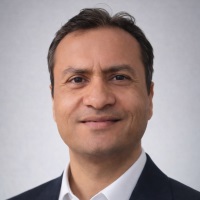
Ashis Das is a physician-epidemiologist with over 20 years of experience in real-world data (RWD) and health economics and outcomes research (HEOR). For more than a decade, he built AI-enabled decision-support and predictive modeling systems on claims, EHR, and registry data—well before "agentic AI" became a category. He now leads AI initiatives at Komodo Health, including Marmot, the company's agentic real-world evidence platform, with a focus on validation: ensuring AI-generated evidence is reproducible, unbiased, and defensible, not just fast. His work spans disease staging, cost-of-care analysis, and comparative device studies across pharma and biotech engagements, where getting the underlying data right is the prerequisite for trusting any AI layer built on top of it.
Appearances:
BioTechX USA Day 1 @ 12:45
AI Built for Research: Accelerating Defensible Evidence from Real-World Data
Most AI isn't built for research. It's built for chat, for dashboards, for demos. In HEOR, that gap shows up fast. Fragmented data. Opaque models. Manual workflows that break the moment a regulator or peer reviewer asks how an answer was produced.
This session outlines a different approach: healthcare-native AI designed specifically for rigorous, defensible evidence. Three pieces, working together. A Healthcare Map of 60+ curated sources with validated representativeness across payers, regions, and care settings. A research-specific architecture with unified visit consolidation, 95%+ cost fill, and continuous enrollment, built so methodology holds up under scrutiny. And an AI engine with visible code generation, stepwise validation, and explicit articulation of every limitation.
The result is RWE that's faster, scalable, and trusted. Cohort identification compressed from hours to minutes. Descriptive statistics that used to take months. Industry standard R-package integration for inferential methods like propensity score matching, survival modeling, and weighted analyses, all version-controlled and replicable. Ready for the moments that matter most: market access discussions, internal strategic decision making, peer reviewed publications, and guideline directed medical therapy for real patients.
Key Learning Objectives
By the end of this session, attendees will be able to:
- Recognize why most AI approaches fail to meet the standards of HEOR research, including issues of data quality, transparency, and scientific rigor.
- Understand the three integrated components of healthcare-native AI: a comprehensive data foundation, a research-specific architecture, and an AI engine built for auditability.
- Map each safeguard to its purpose: visible code for auditable methods, cost imputation for unbiased economics, representativeness for generalizability.
- Identify HEOR use cases (feasibility, cohort construction, treatment patterns, cost and outcomes analyses) where AI built for research can compress timelines from months to minutes while preserving scientific integrity.
Get involved at BioTechX USA

Created by


Terrapinn is proud to be a member of isla.
Working together to build sustainable events