Xunpeng Shi | Professor/President
University of Technology Sydney
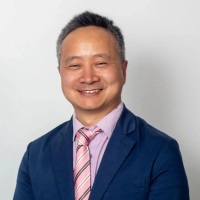
Xunpeng (Roc) Shi is Professor of Energy and Environmental Economics and Sustainability at the University of Technology Sydney and Research Principal at the UTS Australia-China Relations Institute. He is the Founding President of the International Society for Energy Transition Studies (ISETS) and a Council Member of the Chinese Economics Society Australia (CESA), where he served as President from 2016 to 2018. He was named a Clarivate Highly Cited Researcher (2025), recognised as Australia’s leading researcher in the field of Environmental Law and Policy (2020), ranked among the world’s top scientists in the energy field (2020-), and placed among the top 0.3% of authors in the world’s largest economist database based on publications over the past 10 years (RePEc). His work is distinguished by its interdisciplinary breadth and cross-sectoral impact, spanning energy, resources, climate change, and other environmental issues across economics, policy, and sustainable development. Over nearly 30 years, he has developed extensive experience across industry, government, academia, and international organisations in Australia, Brunei, China, Indonesia, Singapore, and beyond, enabling him to bridge rigorous scholarship, policy engagement, and real-world practice. He has published more than 300 papers and articles and has an h-index of 57 (Google Scholar, April 2026). He serves as an editor of the ISETS–Springer Book Series on Climate Change and Energy Transition (https://link.springer.com/series/17226), co-Editor of Journal of the Asia Pacific Economy (SSCI, Q2), an associate editor of China and World Economy (SSCI, Q1), Energy Economics (SSCI, A*), in addition to holding editorial roles with more than 10 journals. He has acted in expert advisory roles to governments (Brunei, Singapore), intergovernmental organisations (ADB, APEC Sustainable Energy Center, UNESCAP), non-governmental organisations (AJBCC, Ember, GEIDCO, Global Gas Centre), and corporate institutions the (GIIGNL), regarding energy pricing and policy, interconnectivity, and critical minerals in jurisdictions as Southeast Asia and East Asia.
Appearances:
Day 1 @ 15:00
SECTION 2: Co-Capacity under CHAFTA V2


Contact us
Sponsorship Enquiries
Matthew.Gatfield@terrapinn.com
Ross.Jamalus@terrapinn.com
Speaking Enquiries
Matthew.Gatfield@terrapinn.com
Created by


Terrapinn is proud to be a member of isla.
Working together to build sustainable events